
Earn well but cannot save money? Escape the lifestyle trap
A higher income makes many choices easier, but it does not guarantee peace of mind. If fixed costs, installments and lifestyle spending rise at the same pace, the month can end with no surplus even when the salary looks high. A drop in income or an unexpected expense then reveals a weakness that monthly cash flow had concealed.
The Raul Sena video that inspired this guide discusses this paradox: people who earn well yet remain in debt or build no wealth. Here, we turn that reflection into a practical method to measure how much income supports the present, how much already belongs to the future and how much is building security and freedom.
1. High income is not the same as financial health
Salary measures money coming in. Financial health also depends on monthly costs, debts, reserves, wealth and the ability to handle change without immediately borrowing. Two households with the same income can face opposite realities when one preserves room and the other makes commitments up to its limit.
That is why “earning well” is incomplete information. A more useful question is: after paying for the present and preparing for predictable expenses, how much income remains available to build an emergency fund, pursue goals and invest? A planned surplus is what turns income into protection and wealth over time.
2. Start the diagnosis with three numbers
Before cutting expenses, understand the system that already exists. Add up net income actually received, the cost of maintaining the month and the result left over. Review at least three months; annual expenses, holidays, taxes and unusual card bills can distort a single snapshot.
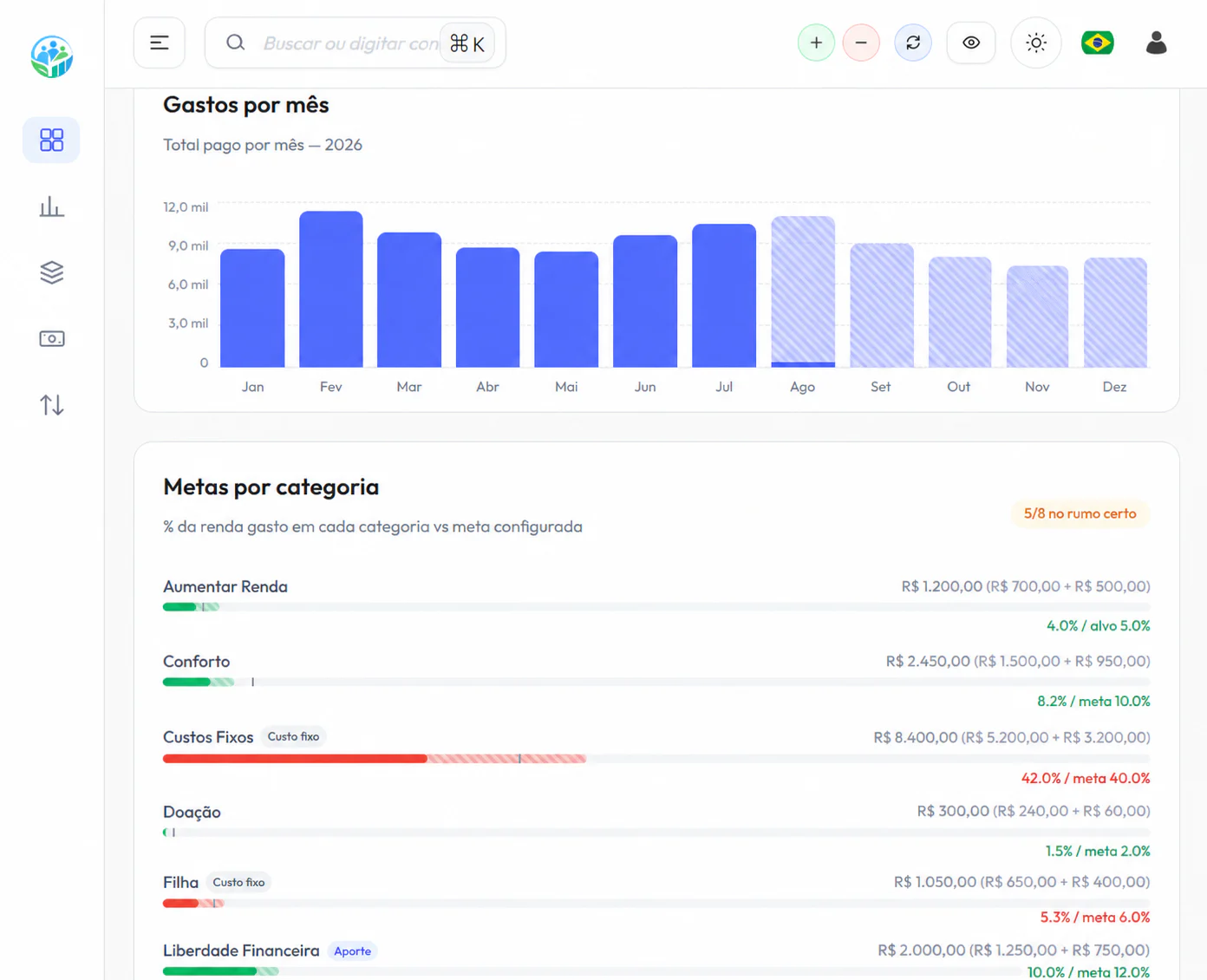
In ClariFin, monthly history and category goals help compare the plan with what actually happened. The aim is not to find someone to blame in every transaction, but to learn whether the lack of surplus comes from a few large commitments, many recurring expenses, accumulated installments or irregular income treated as guaranteed.
- Net income: money that was actually received and is available to use.
- Monthly cost: essential, recurring and variable expenses plus installments paid.
- Real surplus: income minus expenses, excluding card limits and overdrafts.
3. Separate cost of living from lifestyle growth
Inflation, rent, health care, education and family needs can raise expenses without a simple consumption choice. At the same time, part of every income increase may be absorbed by a more expensive car, a larger home, more subscriptions, frequent travel and services that quickly start to feel essential.
The distinction matters because the solutions differ. When essential costs are under pressure, contracts, household structure or income may need to change. For lifestyle upgrades, you can choose which ones provide enough quality of life to deserve permanent budget space. The goal is not to return to a lifestyle that no longer fits your reality, but to prevent every salary advance from automatically becoming a new fixed cost.
4. Credit turns future income into present consumption
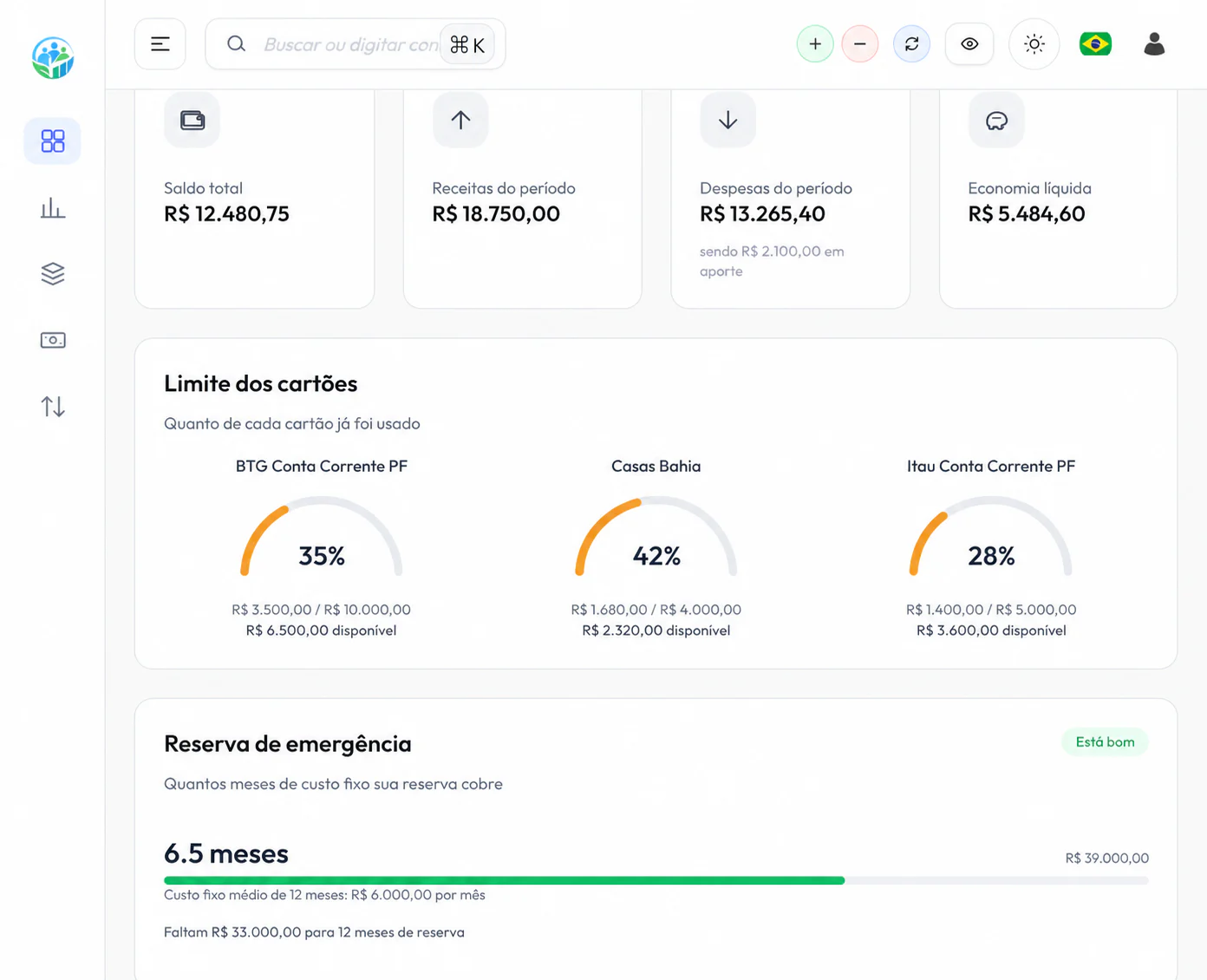
Credit cards and installments are payment tools and can be used with planning. Risk begins when the credit limit is mistaken for purchasing power. Every installment reduces the freedom of a month that has not started, and several small payments can create a bill that arrives already committed.
Before a new purchase, compare the total price with available cash and future installments. If the household depends on revolving credit or a financed card balance to close the month, that is a credit operation with interest and fees, not merely a different payment date. Recovering room then takes priority over rewards, points or new investments.
5. Set a percentage of income aside for the future
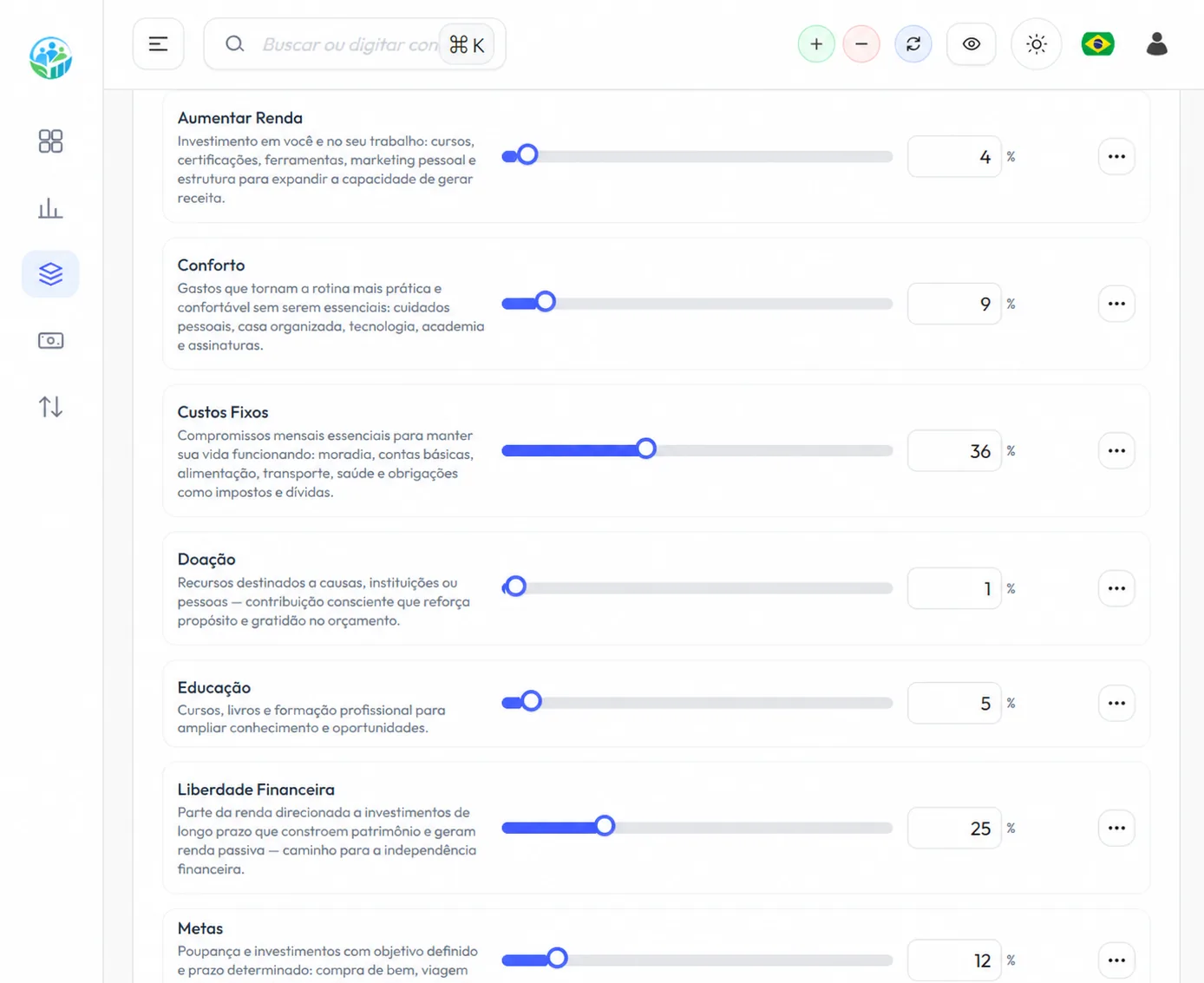
The video presents 25% as a strong reference for saving and investing. It can be a useful target for some households, but it is not a universal rule and need not be reached all at once. Income, dependents, debts, housing and life stage change saving capacity. A sustainable and growing goal is more useful than a high number abandoned in the second month.
Choose an initial percentage that can be protected in most months and treat the surplus as a destination, not an accident. When income rises, decide in advance how much will go to quality of life, goals and wealth. ClariFin category goals make that split visible and help track whether money reserved for financial freedom is actually protected.
- If there is no surplus today, start by recovering any positive margin.
- Raise the percentage after paying off expensive debt or reducing fixed commitments.
- With variable income, use a conservative baseline and send part of stronger months to the emergency fund.
6. An emergency fund protects your choices when life changes
A high income without a reserve still depends on the next paycheck. Job loss, lower revenue, health expenses or home repairs can force a household to finance the emergency while maintaining a high monthly cost. A reserve provides time to reorganize life without making every decision under pressure.
Set the goal from essential expenses and income stability, not gross salary. Keep this money separate from predictable expenses and track progress. The emergency fund does not eliminate risk and should not be confused with capital for long-term goals; it is the liquidity layer that prevents an immediate problem from dismantling the entire plan.
7. Give an income increase a destination before spending it
Raises, bonuses and new contracts often arrive without a distribution rule. If all the money enters the spending account, it tends to blend into the routine and disappear. Deciding the split before the first purchase reduces the chance of turning temporarily higher income into permanent obligations.
One part can improve life today, while another rebuilds the reserve, pays off debt or accelerates goals. There is no single ratio. The central point is to preserve part of the progress for the future. Lifestyle can then improve without taking all the room created by higher income.
8. Run a 90-day plan in ClariFin
Three months provide enough data to see recurring patterns without waiting a full year. Record income, expenses, cards, installments and forecasts; close each month; compare categories; and choose a few adjustments with real impact. Cutting dozens of small pleasures while one large commitment remains untouched often creates fatigue without recovering enough room.
At the end of each cycle, track four signals: monthly surplus, percentage assigned to the future, expensive debt balance and emergency fund progress. ClariFin organizes this information, but it does not define the right lifestyle or replace individual financial advice. It makes consequences visible so the household can choose in advance instead of discovering everything when the bill is due.
- Days 1 to 30: record everything and identify fixed costs, recurring charges, installments and predictable expenses.
- Days 31 to 60: set category limits and stop adding commitments that do not fit income.
- Days 61 to 90: automate the share assigned to the emergency fund or goals and review the result.
- After 90 days: adjust percentages from actual results without deleting history.
Frequently asked questions
How much do I need to earn to be financially healthy?
There is no universal salary. Financial health depends on the relationship between income, expenses, debt, reserves, responsibilities and goals. A lower income with room and protection can be more sustainable than a high income that is fully committed.
Is saving 25% of income mandatory?
No. Twenty-five percent can be a reference or target, but the goal must reflect your reality. If there is no surplus today, begin by recovering a feasible margin and increase it consistently, especially after debt is paid or income rises.
Is every lifestyle upgrade bad?
No. Money also exists to provide comfort and experiences. The problem is turning every income increase into permanent costs without protecting reserves and goals. An upgrade is healthy when it fits the budget and is chosen consciously.
Should I invest while carrying a revolving card balance?
Expensive, growing debt generally requires priority attention because its interest can damage the budget. Compare costs, protect essential expenses and seek appropriate payoff or restructuring terms. For complex situations, consider independent professional guidance.
How does ClariFin help when I earn well but cannot save?
ClariFin brings together income, expenses, categories, cards, installments, forecasts and goals. With the history, you can identify where income is committed, track the monthly surplus, protect a share for the future and review the plan with your household.