
Budgeting is a waste of time — until you need to know where the money went
Some people say budgeting is a waste of time: “I know what I earn,” “I do not need to record every coffee,” or “just spend less.” Part of that criticism is fair. Spending hours feeding a spreadsheet that changes no decision is bureaucracy, not financial management.
The mistake is using that bad experience to conclude that looking at the numbers has no value. A budget does not raise income, repay debt by itself or require cutting everything you enjoy. It does something more basic: it shows consequences while there is still time to choose, instead of explaining the problem after the money is gone.
1. Let us begin by agreeing with the critics
Financial tracking without a purpose can indeed be useless. Recording every cent, creating dozens of categories and checking numbers every day does not improve life if the information answers no real question. How much can I spend? Which bill needs attention? What goal am I delaying? Is next month already committed?
A useful budget is not the one with the most detail. It is the one that reduces surprises and supports decisions. Some people need complete records; for others, a few categories and a weekly review reveal enough. The method must fit the routine, but decisions cannot depend only on memory or feeling.
2. Your account balance is not a budget
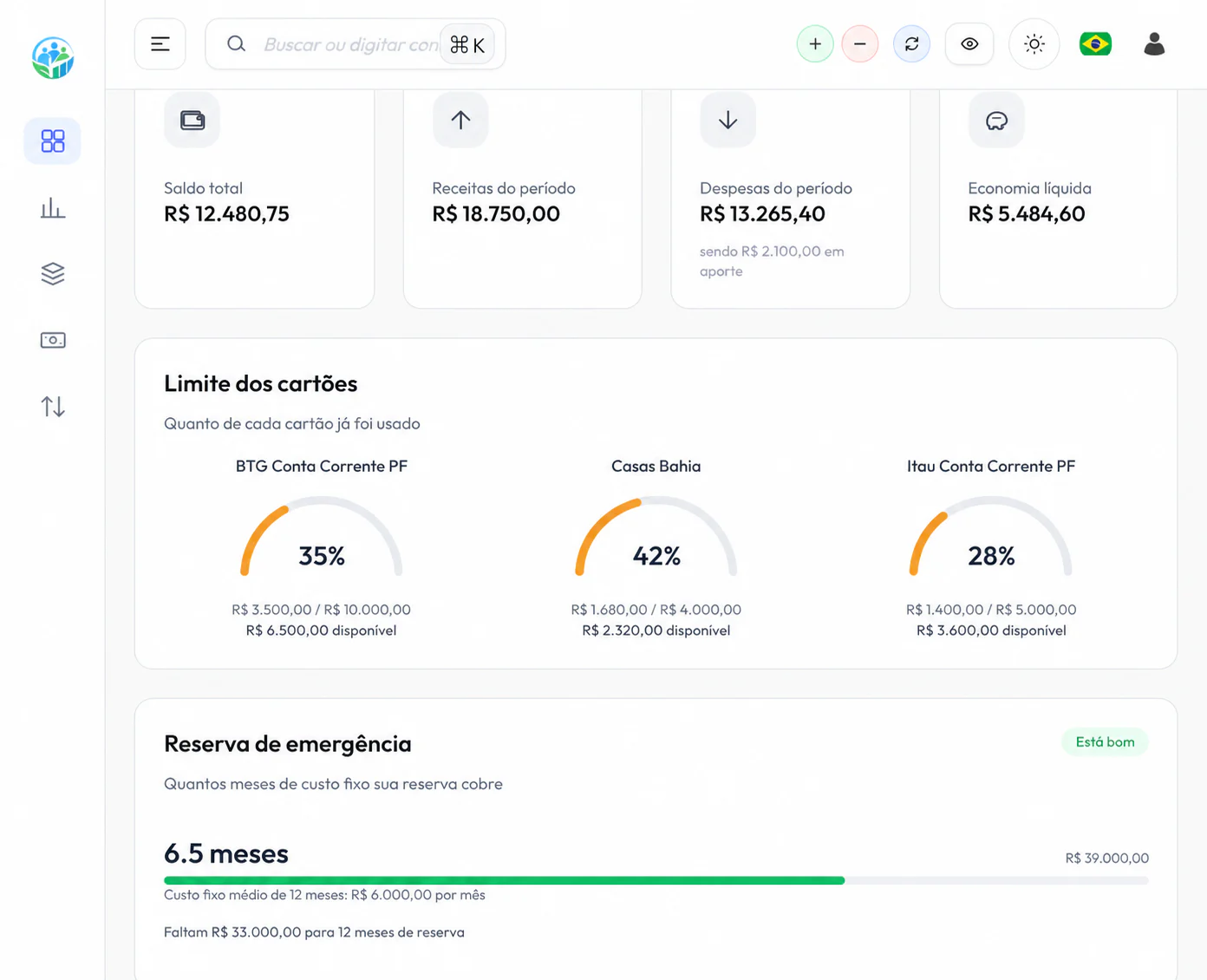
The balance shows how much money exists now. It does not automatically subtract rent, card bills, school, taxes, subscriptions and installments due later. Looking at a positive balance without those commitments means counting the same money more than once.
A budget connects present and future: what came in, what has left, what will still be due and which amount already has a purpose. That view avoids a common trap: feeling that money is available at the beginning of the month and discovering near the end that it was only waiting for the bills to arrive.
3. The payment fits, but the year may not
A R$120 monthly payment looks small when viewed alone. The problem appears when it meets other installments, seasonal expenses and future card bills. The limit approves the transaction, but it does not know your goals, emergency fund or the stability of household income.
Budgeting therefore means more than asking whether the payment fits today. It means seeing how much of the next months is already committed and which choice will lose space. A card can remain a useful payment method, but its limit should never be mistaken for disposable income.
4. Different educators agree on the essential point
Raul Sena, Nath Finanças and Gustavo Cerbasi use different languages and methods, but the materials reviewed converge on one point: before investing, repaying debt or pursuing goals, people need to know income, expenses and priorities. No strategy is consistent when the cost of one’s own life is unknown.
Raul recommends classifying expenses and reviewing the budget frequently; Nath Finanças connects tracking, cards and debt repayment to everyday reality; Cerbasi links a realistic budget, household dialogue and goals. None of these arguments turns expense logging into automatic wealth. They show that better decisions require organized information.
- Recording is not the final goal; reviewing and adjusting are.
- Cutting everything is not planning; choosing priorities is.
- Investing without knowing the real surplus may only hide a fragile budget.
5. The uncomfortable number — without inventing causation
A survey published by the Central Bank of Brazil found that 56% of respondents did not make a household or family budget and 69% had not saved part of their income during the previous 12 months. The report itself notes that not budgeting may influence decisions such as saving, reducing expenses and using loans.
This does not prove that the lack of a budget is the sole cause of low saving. Insufficient income, unemployment, health, housing and inequality matter too. The figure does challenge the idea that tracking money is irrelevant: without measurement, it is harder to separate a lack of margin, waste, expensive debt and a goal with no room in the month.
6. A budget is not a ban. It is permission with visible consequences
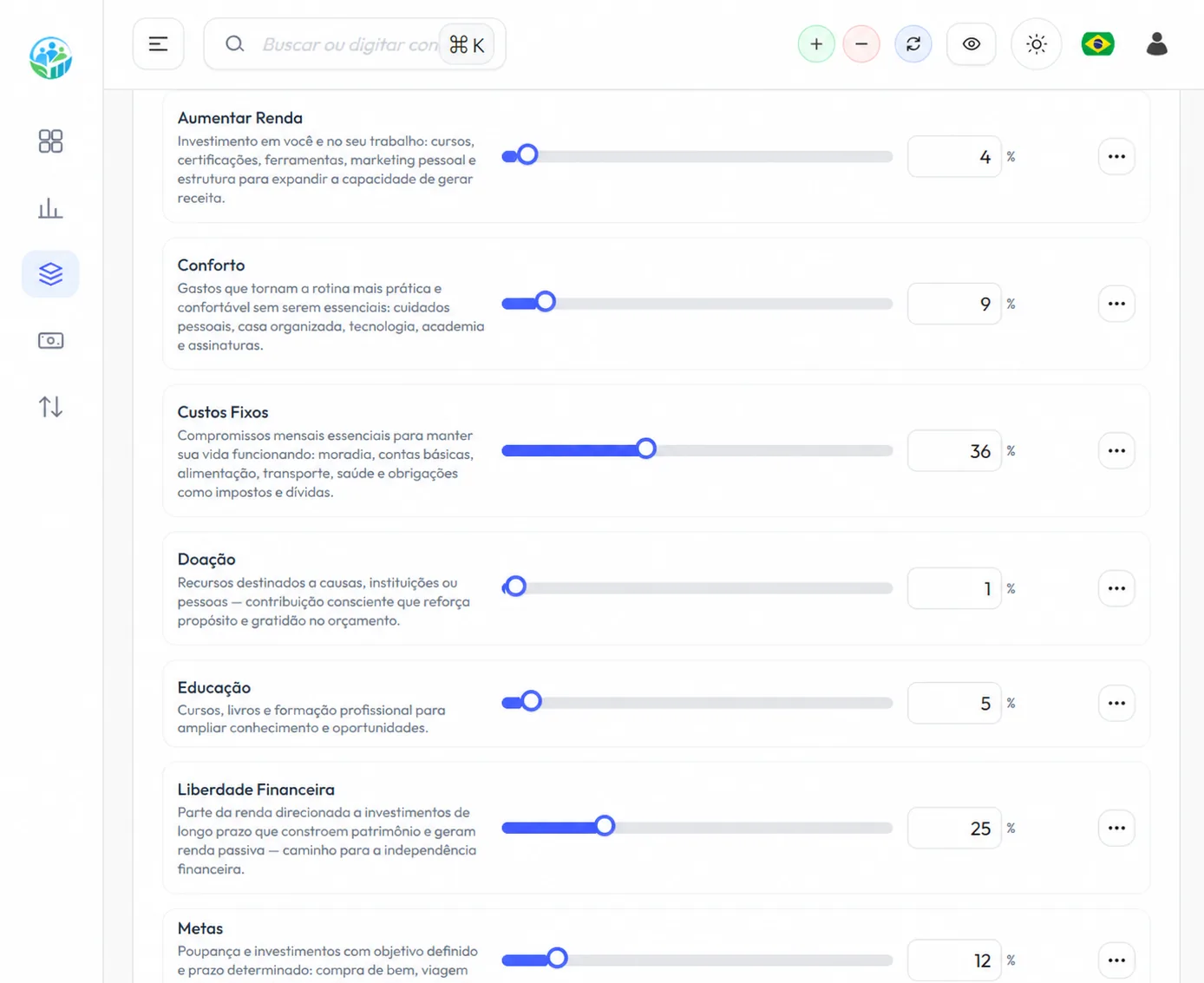
A punitive budget often fails because it turns leisure, comfort and wishes into guilt. The alternative is to make room for what matters. When housing, food, reserves, projects and leisure have realistic limits, spending stops becoming an emotional negotiation at every purchase.
Category targets do not need to be universal rules. Percentages should reflect income, dependents, life stage and household priorities. Their value is showing early when one category advances over another so that the trade-off becomes a conscious choice.
7. The minimum viable system for people who hate budgeting
You do not need a perfect system to begin. For 30 days, record income, fixed bills, cards, installments and relevant variable spending. Once a week, take a few minutes to compare what happened with what is still due. The first target is clarity, not absolute accounting precision.
Then simplify. Merge categories that do not help decisions, automate what you can and keep attention on the items that change the result: fixed costs, card bills, debt, recurring spending and goals. If a piece of information never triggers a question or action, it may not deserve space in the routine.
- How much income actually arrived this month?
- How much is already committed before the next payment?
- Which category moved away from the plan, and why?
- What went to reserves, goals or debt reduction?
- Which decision must be made before next week?
8. In ClariFin, history needs to become a decision
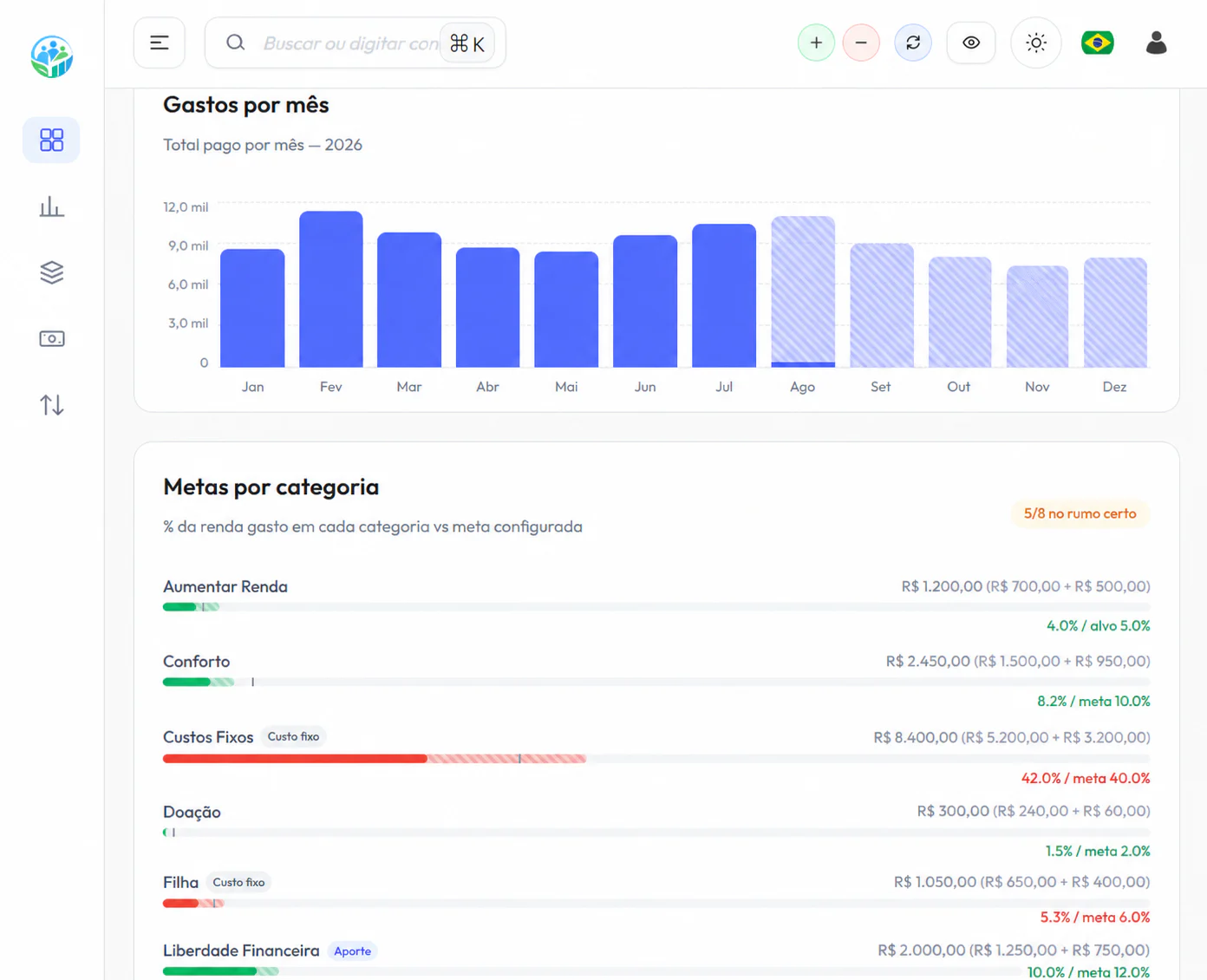
ClariFin brings together transactions, categories, cards, installments, targets and the household view to reduce the work of combining scattered information. The monthly dashboard and annual comparison help reveal patterns, pressured months and differences between plan and reality.
The tool does not choose your priorities or solve insufficient income. It organizes reality so you can act earlier: adjust a category, delay a purchase, prepare an annual expense, discuss how household costs are shared or protect a contribution. Tracking matters only when it improves the next choice.
9. Still think it is pointless? Run a 30-day test
Instead of accepting a financial education rule, turn the debate into an experiment. Track only what is necessary for one month and record three discoveries: an expense you underestimated, a future commitment that did not appear in the balance and a choice made earlier because the information was available.
If nothing changes, simplify or discard what did not work. But if tracking avoids one surprise, protects a goal or improves a household conversation, it is no longer bureaucracy. The best budget is not the prettiest one; it is the one that gives back decision time.
Frequently asked questions
Do I need to record every coffee?
Not necessarily. Use the level of detail that helps you decide. Small recurring purchases deserve attention when their total changes the result; otherwise, they can remain in a broader category.
Is a budget only for people in debt?
No. It also helps people whose bills are current protect reserves, prepare future expenses, distribute priorities and turn income into goals and assets.
Can I manage everything using only my bank statement?
A statement is an important source, but it mostly shows what already happened. A budget also includes card bills, installments, due dates, forecast expenses, goals and money that already has a purpose.
How do I budget with variable income?
Use a conservative base, separate essential costs, avoid creating fixed commitments from exceptional months and set rules in advance for dividing higher income among reserves, goals and expenses.
Does ClariFin decide how much I can spend?
No. ClariFin organizes transactions, cards, installments, categories, targets and the household view. You and your household continue to define limits and priorities.
Sources and references
- Central Bank of Brazil — survey on household budgets and saving habits
- Central Bank of Brazil — what a personal budget is
- Raul Sena (Investidor Sardinha) — how to organize a household budget
- Nath Finanças — budgeting, financial control, cards and debt
- Gustavo Cerbasi — financial diagnosis and goal planning