
Installments are not the problem. Buying without the money is.
There is a comfortable recommendation because it fits in one sentence: never use installments. It sounds responsible, but hides what actually determines the decision. If the total price is the same, the money already exists and stays reserved until the bill, installments can preserve liquidity and may even create a small financial advantage.
Now comes the uncomfortable part: when the money does not exist, an installment did not make the purchase cheaper. It only handed the bill to your future income. This guide separates those situations, shows what to compare and offers a simulator so discount, term and return stop being matters of opinion.
Simulator: pay now or in installments?
Compare the options using the total price, the cash discount and a net-return assumption for the reserved money. The calculation runs only in your browser.
Comparison result
In this scenario, installments preserve approximately $42.49 in today's money.
Because the money already exists, the comparison is meaningful — as long as it stays separate, the bill is paid in full and the cash discount is not ignored.
Educational simulation. It assumes equal monthly installments, the first payment in one month and a constant rate. It does not include fees, risk, liquidity, return changes or spending behavior.
1. The sentence almost nobody finishes
“Installments are bad” is as incomplete as “installments are always better because the money earns a return.” Both statements ignore price, discount, term, taxes, risk and behavior. A payment method can only be judged together with the budget and the money supporting the decision.
The point is not to defend credit cards. It is to separate credit used as a payment method from credit used to bring forward spending that does not fit yet. In the first case, the amount is already under control. In the second, months of income are committed before they exist.
2. Three identical purchases at checkout — and opposite budgets
Imagine a product priced at $1,000. The label is the same for everyone, but the financial decision changes completely depending on where the money comes from. Looking only at “10 payments of $100” erases that difference.
- You have $1,000, lose no cash discount and keep the money reserved: installments may be rational.
- You have $1,000 but receive a meaningful cash discount: compare that discount with a plausible net return.
- You do not have $1,000 and depend on future paychecks: you are not choosing where to keep money; you are taking on a future obligation.
3. The math: a discount now or money earning a return?
The comparison starts with the full installment price, never the size of one payment. Then bring the installments to present value using a prudent net-return assumption. If their present cost is below the cash price, installments have a mathematical advantage. If the cash discount is larger, paying now preserves more money.
The simulator assumes equal payments, the first in one month and a constant rate. It does not know your discipline, the chance of spending the reserve, investment liquidity or changing rates. The result is one input for a decision, not automatic permission to buy.
4. “The payment fits” is the wrong question
A $100 payment may fit today and still be a poor choice. It has to fit alongside housing, groceries, bills, existing card balances, reserves and every other installment that will keep arriving. A budget rarely breaks because of one payment; it breaks through accumulated small decisions competing for the same income.
Change the question. Instead of “does the payment fit?”, ask: “how much of the coming months is already committed, and what will stop being funded if I add this obligation?”. That shift removes the focus from available credit and returns the decision to priorities.
5. A credit limit is not income — or a reserve
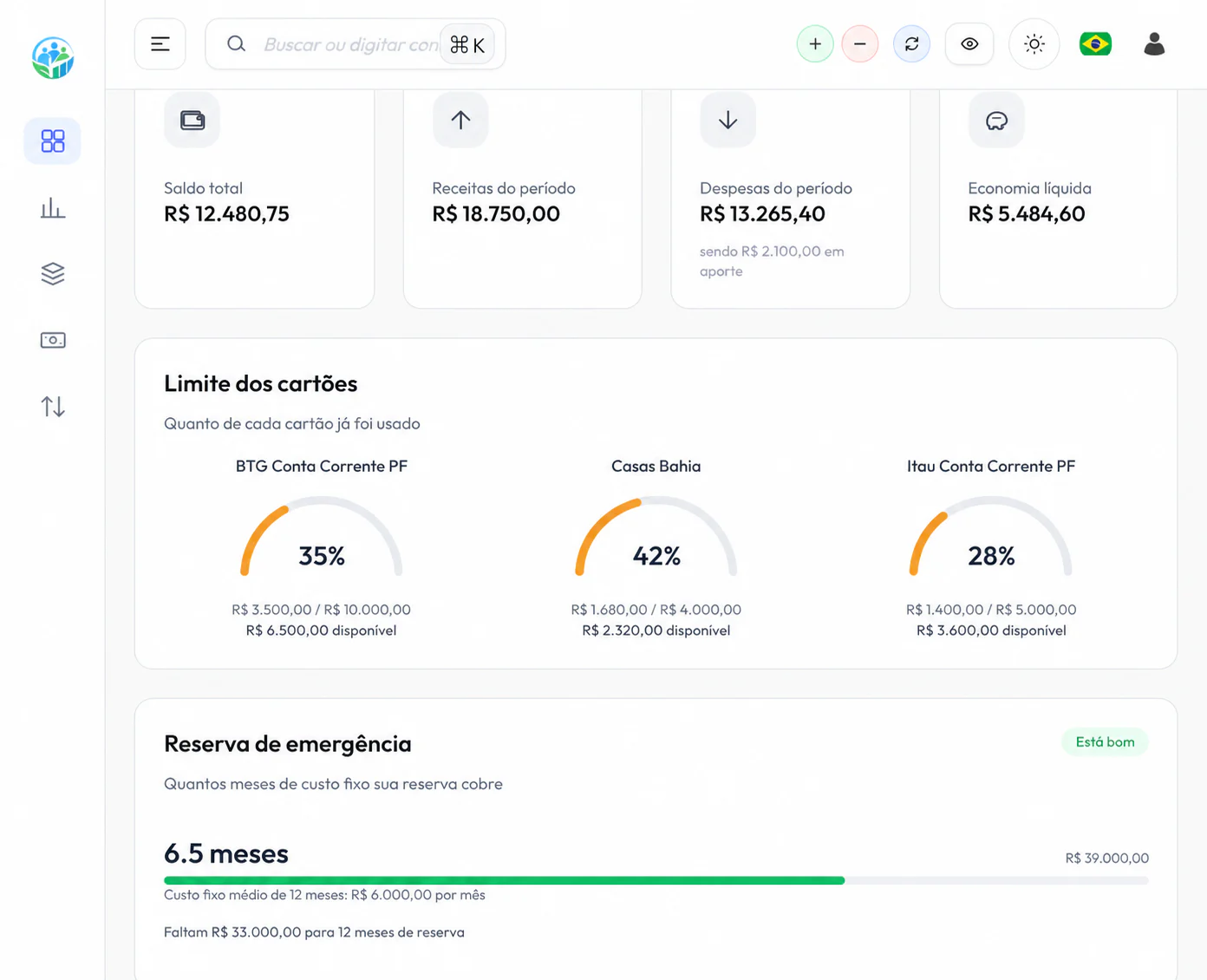
A limit shows how much the issuer is willing to lend, not how much you can safely spend. A larger limit does not increase salary, wealth or ability to pay. It only increases the size of a possible mistake when the card is used without a personal rule.
In ClariFin, used limit, available limit and installment purchases appear together. The useful information is not “the purchase was approved,” but how much of the current and future bills has already been occupied before adding something new.
6. Healthy installments begin before the purchase
If you choose installments while already having the money, that money must keep existing. Separate it from daily spending, keep liquidity aligned with due dates and automate full bill payment. Points, miles or returns are benefits only when they do not cause interest, delays or extra consumption.
Protect the emergency fund too. Having money for the purchase does not mean using the amount that protects housing, food and health. A purchase reserve has a destination and a term; an emergency fund exists for events you did not choose.
- Compare the full installment price and the cash price before looking at points or cashback.
- Keep the amount separate and available until the last payment.
- Pay the bill in full; revolving credit quickly destroys a small advantage.
- Do not increase consumption merely because payment was spread over time.
7. What if the expense is necessary and the money does not exist?
Sometimes avoiding the expense is not an option: health, an urgent repair, work equipment or a family need. In that situation, installments may be the available alternative. The goal is no longer to capture a return; it is to reduce harm, protect essential bills and build a plan that survives the following months.
Compare the full cost, choose the shortest term that truly fits, keep room for unexpected expenses and avoid stacking new installments. Planning does not turn necessity into guilt; it turns a hard obligation into a visible, manageable commitment.
8. Look at the year before committing the next paycheck
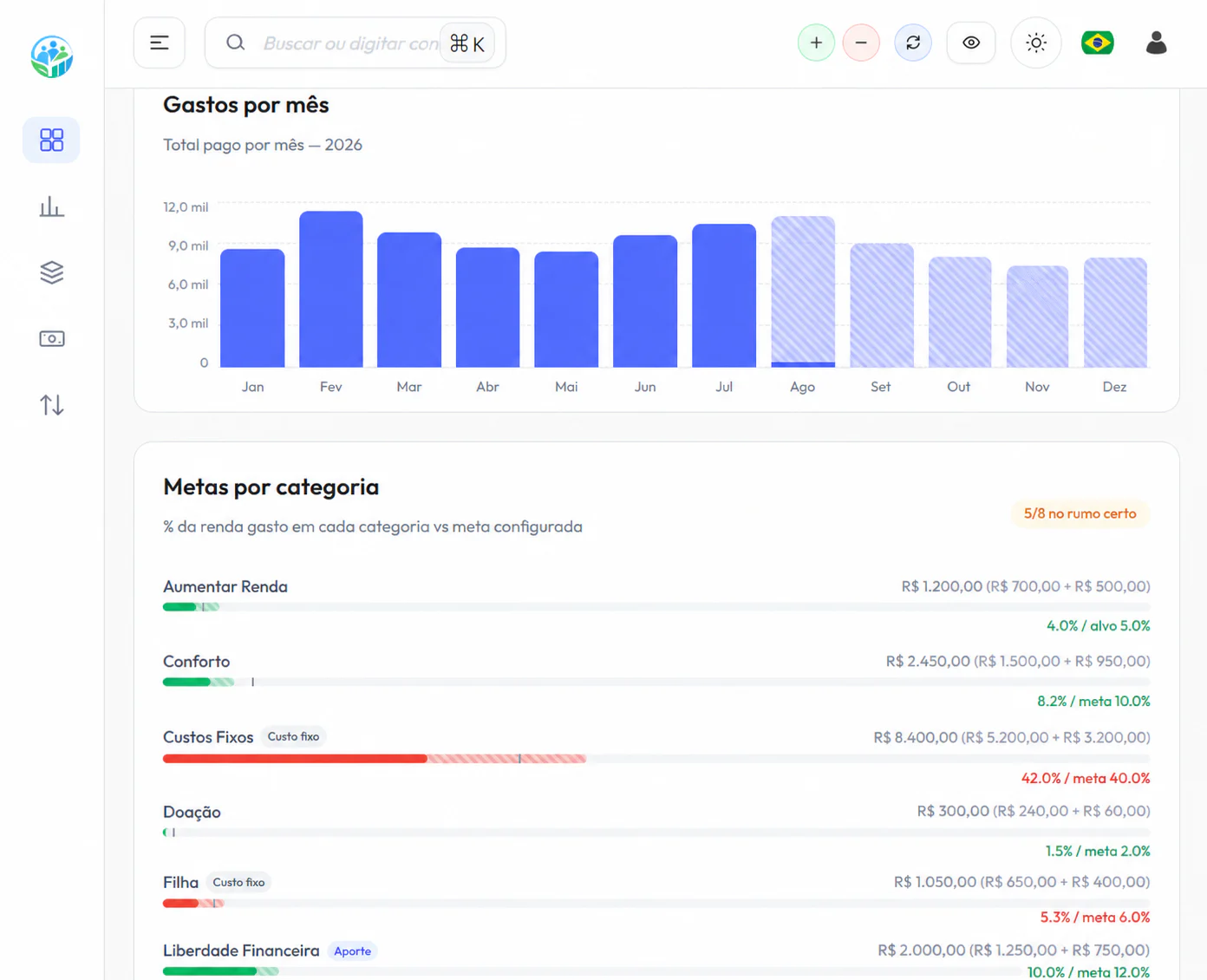
ClariFin creates every installment when the purchase is recorded and places it on future card bills. That lets you see today how the choice affects coming months instead of discovering the pile only when each bill closes.
The annual view and category targets show which months are already under pressure and which goal will lose room. The app does not choose between cash and installments; it reveals the consequences so the mathematical comparison meets real life.
9. A practical 60-second decision rule
Before completing the purchase, answer these questions in order. If an important answer is hidden, the decision is not ready. A short pause costs less than months correcting a bill that looked small.
- What is the total price under each payment method?
- Is there a cash discount, and what percentage does it represent?
- Do I already have the money without touching my emergency fund?
- Will the money remain separate and liquid until the last payment?
- Will future bills still fit if something unexpected happens?
Frequently asked questions
Is buying in installments always bad?
No. It may make sense when the full price was compared, the money already exists, stays reserved and the bill will be paid in full. Without the available amount, installments commit future income and require a different analysis.
If cash and installment prices are equal, are installments better?
There may be a mathematical advantage if the money remains reserved, liquid and earning a return until each due date. In practice, discipline, taxes, risk, liquidity and the possibility of spending the reserve also matter.
How do I compare a cash discount?
Compare the cash price with the present value of the payments using a prudent net-return assumption. The simulator on this page estimates it but does not include risk, fees or rate changes.
Can I use my credit limit to decide whether the purchase fits?
No. A limit is credit offered by the issuer. To know whether it fits, look at income, essential spending, existing bills, future installments, reserves and goals.
Does the simulator recommend where to invest the reserved money?
No. It only compares scenarios using the net rate you enter. It does not recommend a financial product or guarantee returns. Installment money needs liquidity and risk compatible with due dates.