
Elections do not replace your family budget
During election periods, it is natural to follow proposals, inflation, employment, interest rates and possible changes in the economy. All of this can affect households. But one decision cannot wait for the result: understanding what is already committed in your household budget.
This is not an article about whom to vote for, nor an attempt to predict a country. It is a guide to rely less on predictions. Credit card statements, rent, installments, school fees and essential spending remain before and after any election. A good budget does not control the outside environment. It keeps you from discovering too late how that environment meets your daily life.
1. Economic uncertainty is not a financial plan
Changes in prices, employment, credit and interest rates can change real decisions. Ignoring that context would be naive. The problem begins when a household turns expectations into a budget: taking an installment because of an expected promotion, delaying an emergency fund because rates may fall, or raising its lifestyle based on an improvement that has not arrived.
Responsible planning works with money already available, recurring income and known commitments. Scenarios can be monitored, but they should not be the only basis for long commitments. A more useful question is not which headline may change the economy tomorrow. It is how much of the household income already has a destination if nothing improves next month.
2. Bills do not go into recess during an election
When public debate takes all the attention, future expenses can become invisible. A bank balance may look comfortable, yet it may already belong to a card statement, tuition, an annual tax, an installment or a recurring expense.
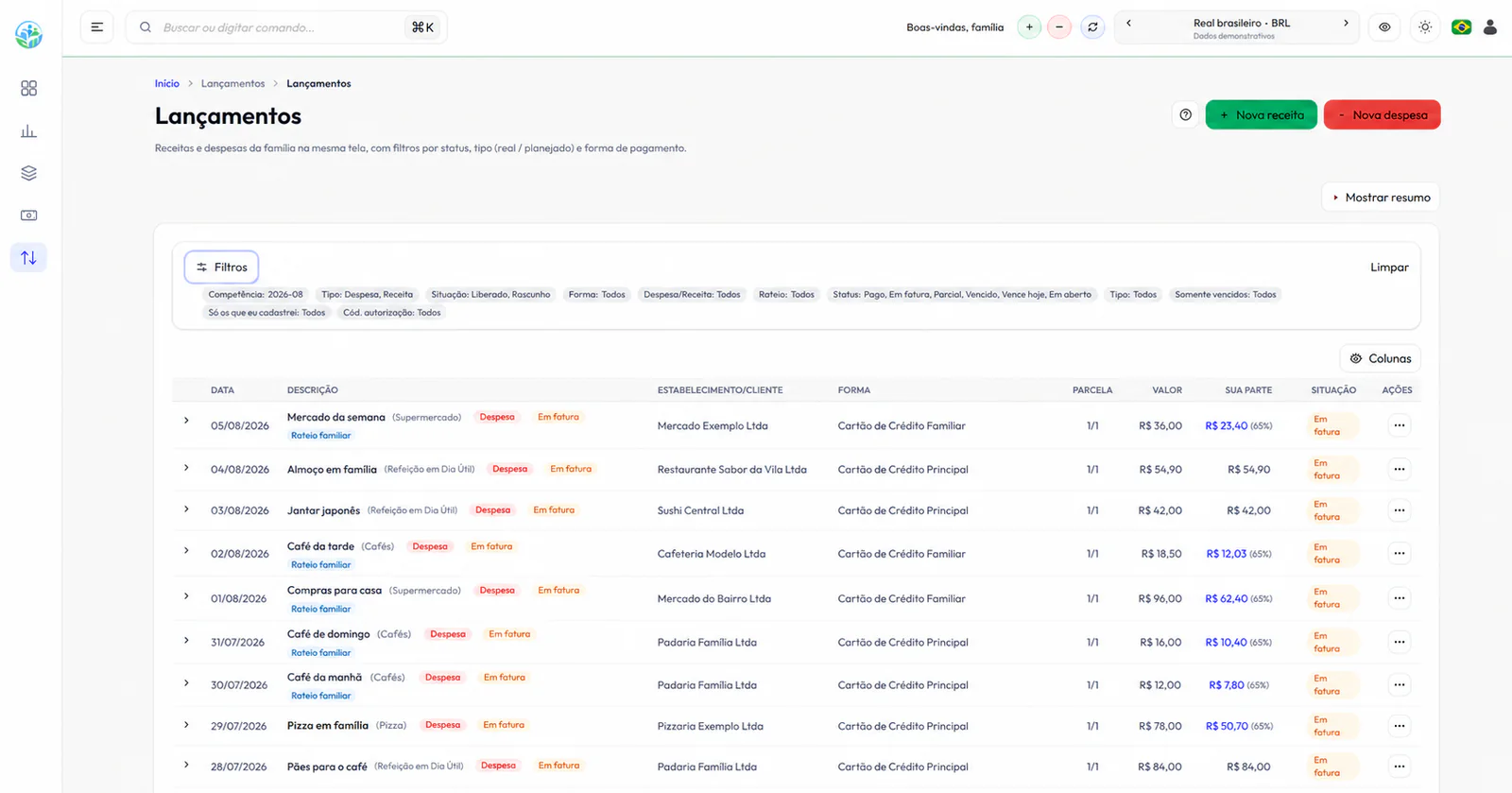
That is why a budget is more than a list of what has already been spent. It connects expected income, fixed costs, open statements, future installments, variable expenses and money set aside for priorities. Seeing these parts together lowers the risk of spending today what was already committed.
3. Control does not promise immunity. It reveals choices before pressure arrives
A budget does not fix insufficient income, prevent emergencies or eliminate inflation effects. Claiming otherwise would sell a solution that does not exist. The value of control is different: it helps separate lack of margin, excessive commitments, adjustable spending and what needs protection early.
That clarity changes the moment of decision. Rather than notice a problem when the statement closes, a household can postpone a purchase, review a category, renegotiate a commitment or discuss shared expenses while alternatives still exist. Organized information does not solve everything, but it reduces decisions made in the dark.
4. The minimum map to know where your household stands
You do not need a perfect spreadsheet or every detail to begin. The first map should answer a few decisive questions. If information does not help with a decision, it can be simplified later.
- Which income is recurring and which part is exceptional?
- How much does it cost to maintain the household essentials in a normal month?
- Which statements, installments and due dates already occupy the coming months?
- How much emergency money is available and which part already has a purpose?
- Which variable expenses can be adjusted without harming essentials?
5. Use three scenarios without trying to predict a political result
Instead of betting on a single forecast, build three simple views. In the base scenario, use income and costs you already know. In a conservative scenario, consider a temporary income reduction or a rise in an essential expense. In a pressure scenario, see what happens if an urgent expense occurs or one income source is delayed.
The goal is not to forecast a recession, inflation or markets. It is to learn whether the budget can absorb a surprise without automatically using expensive credit. If the conservative scenario does not close, the next step may be to reduce new obligations, revisit flexible spending and reinforce a safety margin before taking more risk.
6. An emergency fund and priorities create time to decide
An emergency fund is not an investment to win a return race. It is money with a protective purpose: keeping basic needs covered when something happens that the household did not choose. The right amount depends on income, stability, dependents, debt and essential costs. No universal number fits every household.
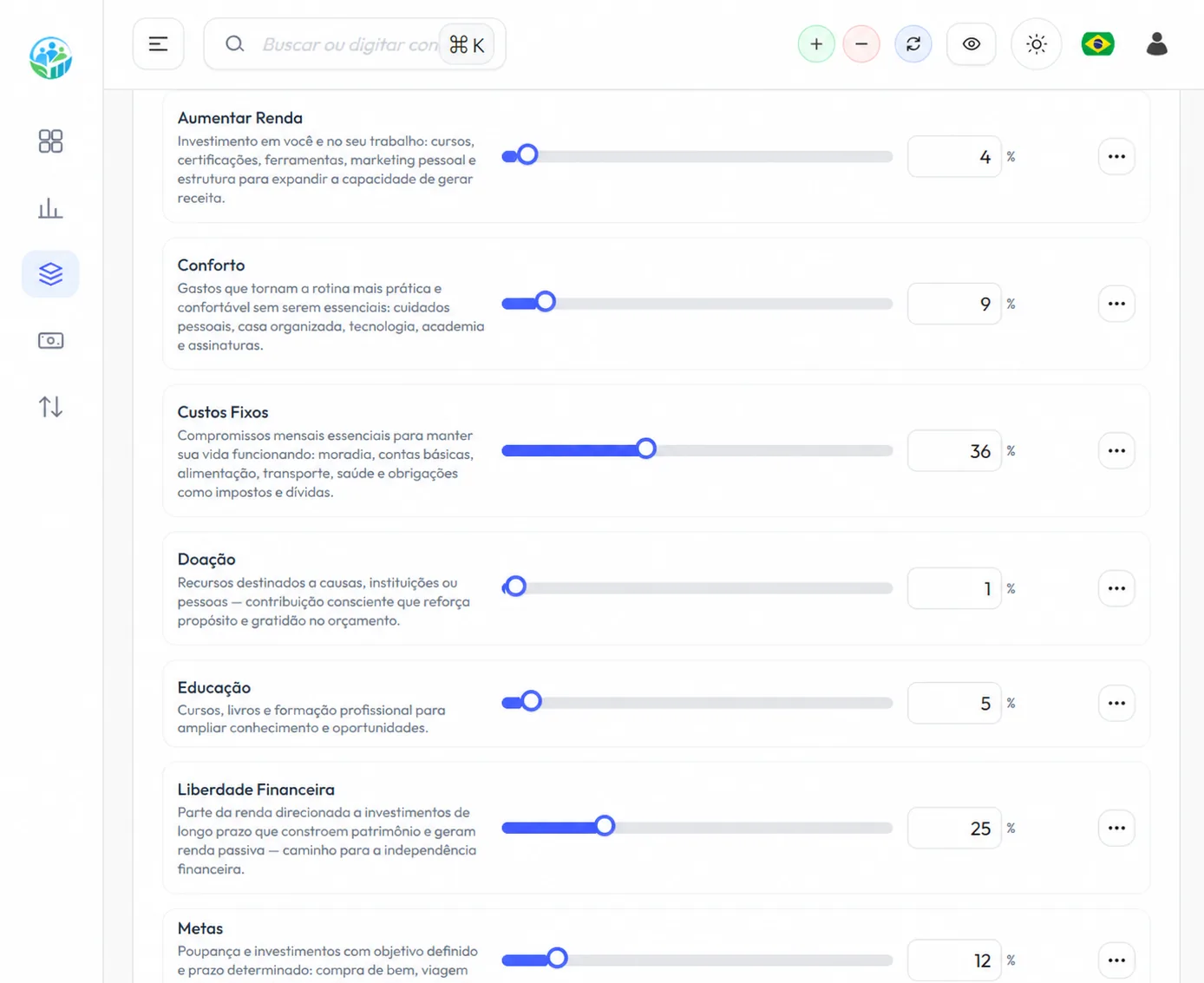
Separating emergency money, goals and consumption also prevents a common confusion. Money saved for a trip, a planned purchase or an installment is not emergency money. Each goal needs a rule for use, timeframe and liquidity. When everything sits in the same balance, any unexpected event seems to consume the whole plan.
7. Test an installment against the budget before taking it on
You do not need to stop living or postpone every purchase during uncertain times. A necessary expense may not wait. The difference is not deciding from the payment amount or approved credit limit alone. A card limit is credit offered by an institution, not household income or an emergency fund.
Before taking on a commitment, compare the total price, review upcoming statements, protect essential costs and ask what would happen if income stayed the same or decreased for a few months. If the answer depends on an improvement that is not confirmed, the purchase deserves more time, a shorter term or a less expensive alternative.
8. A 30-minute routine that turns news into a decision
Choose a day each month or week to look at your budget before consuming more financial news. Update important transactions, check statements and installments, compare planned and actual spending, and choose one concrete action. The routine works best when it ends with a decision, not another screen full of numbers.
In ClariFin, transactions, cards, installments, categories, goals and the family view stay together to reduce the work of combining different sources. The app does not recommend a candidate, investment or purchase. It helps you see what is already committed so your household can decide with context.
- Update meaningful income, spending and commitments.
- Confirm that the current and upcoming statements still fit.
- See which category moved away from plan and why.
- Protect an emergency fund or a goal before making room for a new installment.
- Set one decision for the coming week.
Frequently asked questions
Does this guide tell me whom to vote for?
No. This article does not recommend a candidate, party or vote. It addresses financial autonomy: regardless of the political scenario, household bills, statements and priorities still require attention.
Should I stop all spending because of an election?
Not necessarily. Essential expenses and planned purchases may continue. Test the total cost and future commitments against conservative income without relying on an uncertain improvement.
Does a budget solve inflation or insufficient income?
No. Those issues require responses beyond personal organization. A budget helps identify the size of the problem, protect essentials and make adjustments earlier.
How much should I keep in an emergency fund?
There is no universal number. Consider essential costs, income stability, dependents, debt and access to credit. The fund should be liquid and protective, not free money for planned consumption.
Does ClariFin recommend investments or political decisions?
No. ClariFin organizes transactions, cards, installments, categories, goals and the family view. Spending priorities and investment decisions remain your responsibility and, where appropriate, that of qualified professionals.